
A Youth Ocean Advocate's Reflections on COP27
By Mahfudh K Omar, Youth Leadership Council Member
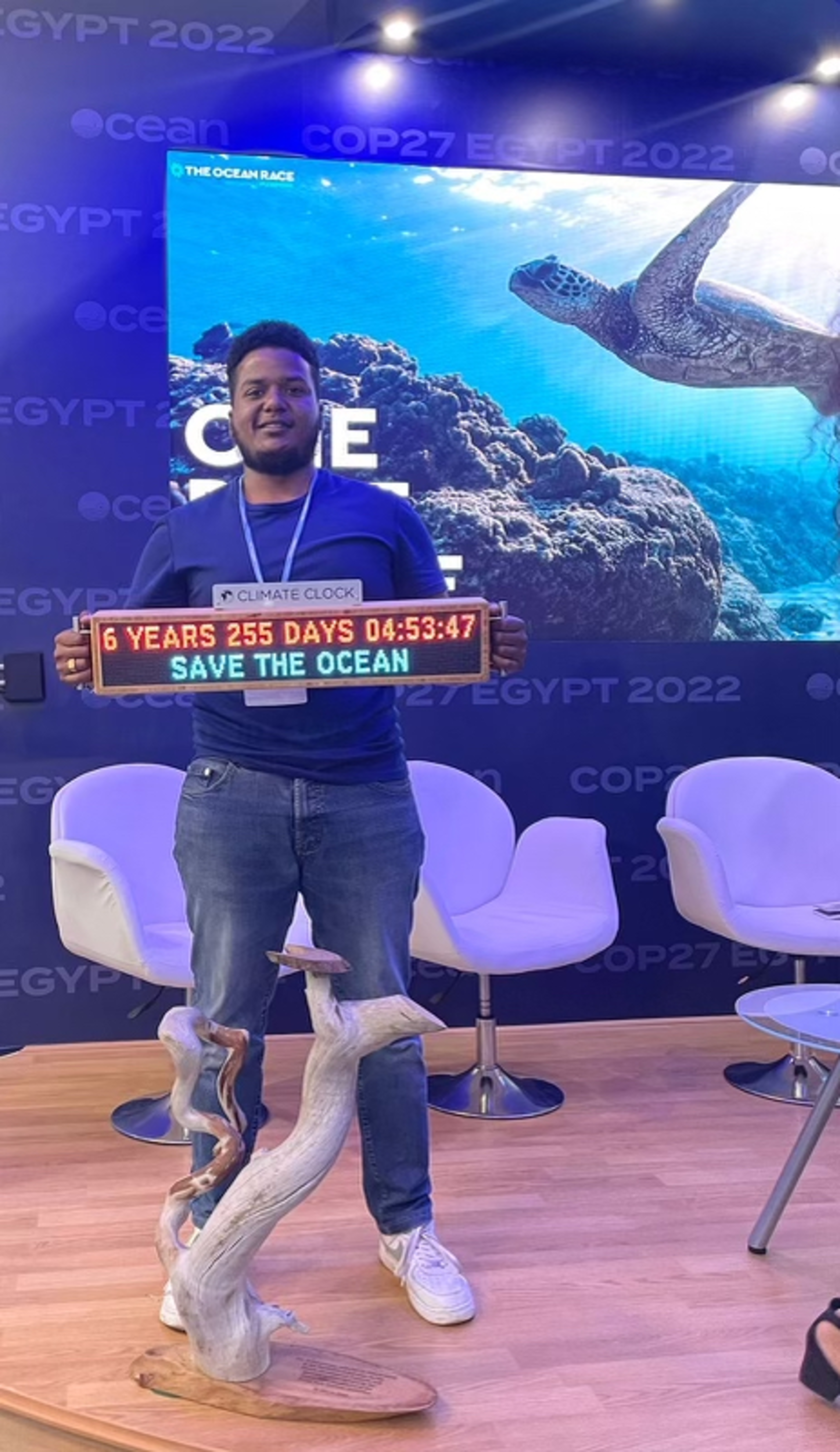
Hello, young ocean leaders. My name is Mahfudh Omar and I am part of the EarthEcho International Youth Leadership Council. This November, I got the opportunity to represent youth ocean advocates at the 27th Climate Conference of Parties (COP27) in Egypt.
Climate COPs bring together climate leaders, activists, and youth to discuss, debate, and decide on policies to reverse the climate crisis and maintain a required 1.5c of warming to avoid more catastrophic impacts of global warming. Coming from the Global South, I did not attend COP27 just as a young climate activist but as a representative of local communities and those at the frontlines of the climate crisis, who make fewer contributions to the climate crisis but are more impacted by it.
The Climate COPs are named based on the pressing issue of the climate each year. COP27 was named the Implementation COP with the goal of implementing previous agreements that were decided on but not acted upon, as well as implementing new climate actions. COP27 had three venues, the blue zone, the green zone, and the innovation zone. All three venues hosted various pavilions. The blue zone is where high-level events and discussions took place before and after plenary sessions. Plenary sessions in Climate COPs are where all stakeholders report to the current COP presidency and countries also share their perspectives and interventions. A plenary session is conducted in a presentation form of what stakeholders have negotiated internally and is open to everyone to participate as observers, but negotiations are restricted to those with a negotiator badge.
For the first time in the history of Climate COPs, an ocean pavilion was set up in the blue zone, because the ocean agenda must be aligned with the climate agenda. The Ocean Pavilion brought together ocean leaders, marine professionals at various stages of their careers, young ocean lovers and activists, and representatives from coastal communities including from small island developing states. Everyone that attended together highlighted plights, exchanged solutions and agreed on commitments to achieve the 14th Sustainable Development Goal (life below water) and prioritize ocean-based solutions.
Each day of COP27 was themed and events of the day revolved around the theme, such as youth day and finance day. The Ocean Pavilion also had its events aligned with the day’s theme such as having events for ocean funding on finance day. Top climate leaders visited the Ocean Pavilion including the U.S. Special Presidential Envoy for Climate, John Kerry, who emphasized that we cannot protect the oceans without solving climate change and we can’t solve climate change without protecting the oceans.
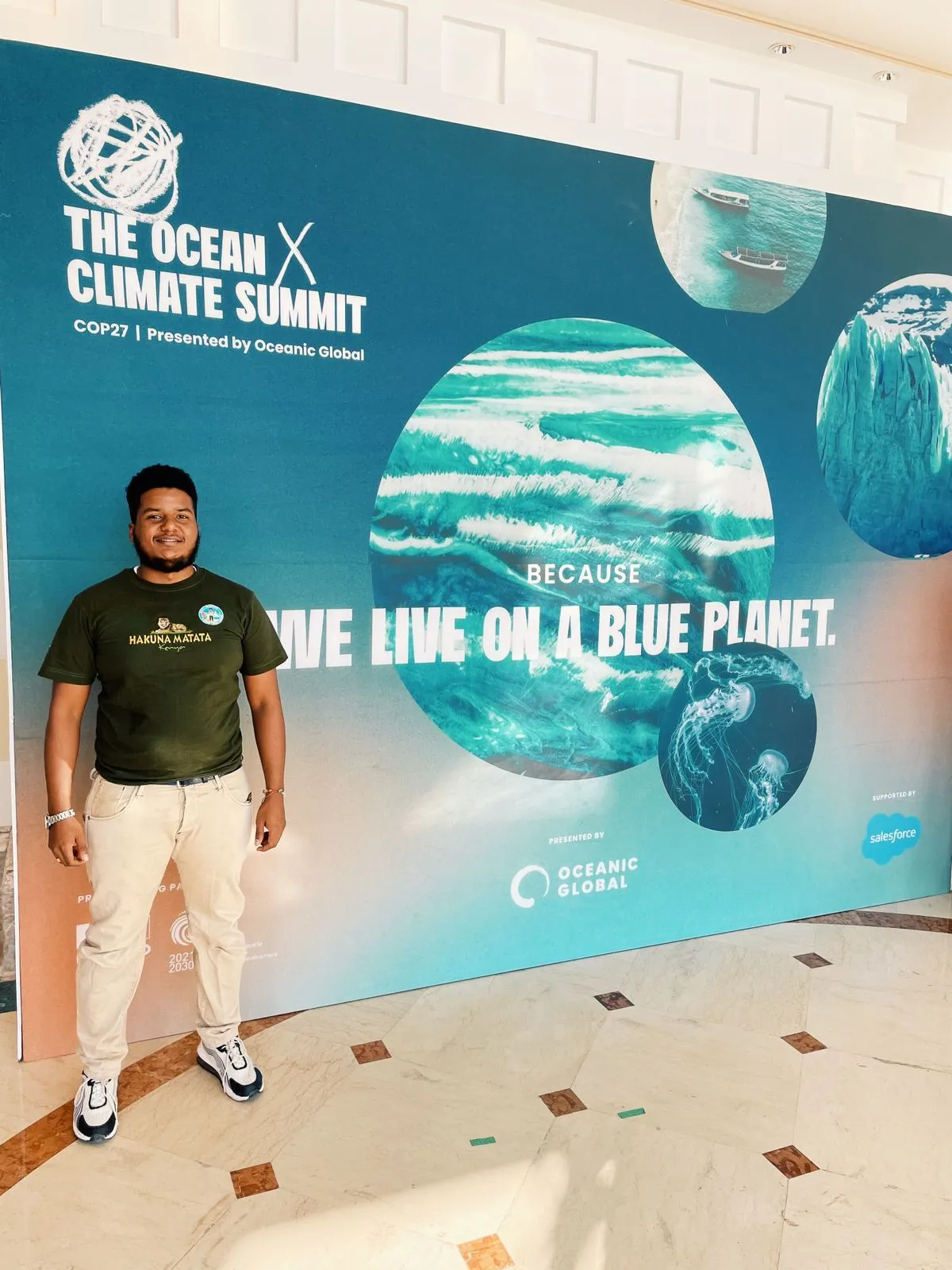
Being a young ocean leader did not mean attending only sessions happening at the Ocean Pavilion. I also spent time at the Climate Mobile Pavilion to understand the impact of sea level rise on mobility, as well as the Africa Pavilion to revisit the Ocean Decade for Africa roadmap, among others. A day at the Climate COP is not only about negotiations and discussions, it is a place where new connections are made as the conference brings almost every nationality together, not to talk about how different we are, but how we are tackling a common challenge, the climate crisis.
After a day at the COP venue, I preferred to wind down at the eco-lodge I was staying in, watching the waves of the Red Sea and an orange sky painted by the South Sinai sunset. I spent my last days in Egypt after the COP27 snorkeling in the shallow reefs of Sharm el Sheikh’s Red Sea and diving with other young ocean leaders. We explored the blooming corals rich with schools of fish all different and all beautiful.
Despite the beautiful reefs that attracted marine life, the Red Sea has had parts of its corals bleached and acidified as a result of climate change, which made the underwater landscape look dull and empty of marine life. This left me to ponder how real-time climate change is affecting even the Red Sea which is known for its climate-resilient coral reefs.
COP27 concluded with the establishment of a loss and damage fund. This is a critical part of climate financing exploring ways to facilitate fair funding access to recover from the effects of the climate crisis, especially for Global South countries. COP27 was the largest COP in history with 49,704 attendees, surpassing 11,000, the previous record held by COP26 in Glasgow.
COP28 will take place in the United Arab Emirates and I encourage every young ocean leader to seek means of attending a Climate COP physically or virtually to air the critically needed youth voices. The COPs are becoming an important site for holding parties and powerful players to account as well as for movement building to restore our climate for the better of us and future generations.